Plant Cell Structure Diagram Generator
Free online Plant Cell Structure Diagram generator: get a fully labeled figure in about 90 seconds. The AI plans the must-have label list first, then renders a clean textbook-style diagram — every label editable afterwards, ready for papers, assignments and slides.
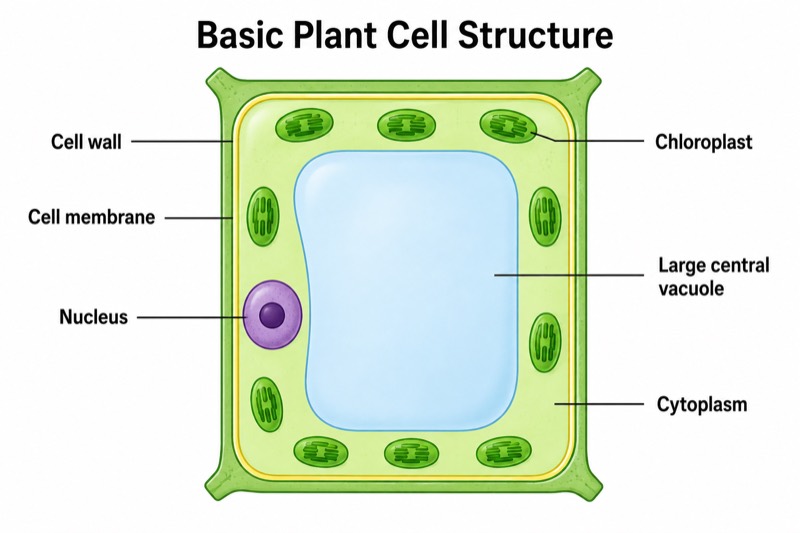
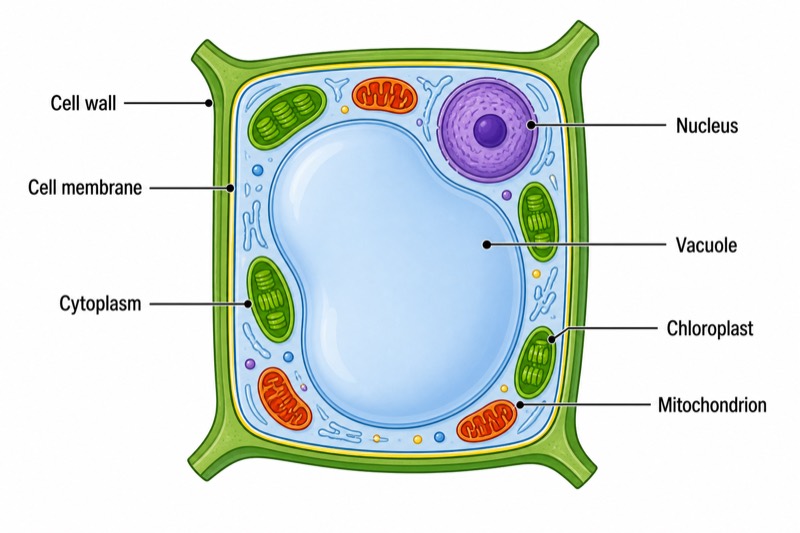
Labels included in this diagram
- Cell wall
- Cell membrane
- Cytoplasm
- Nucleus
- Chloroplast
- Vacuole
- Mitochondrion
✓ Accurate labels ✓ Edit text after generation ✓ PNG for papers, posters & slides
 OUTPUT · 16:9 · PNG
What this diagram shows
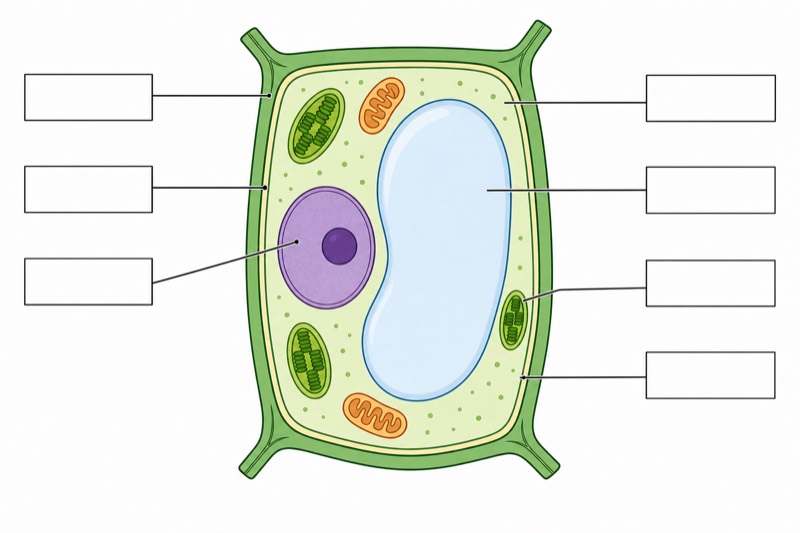
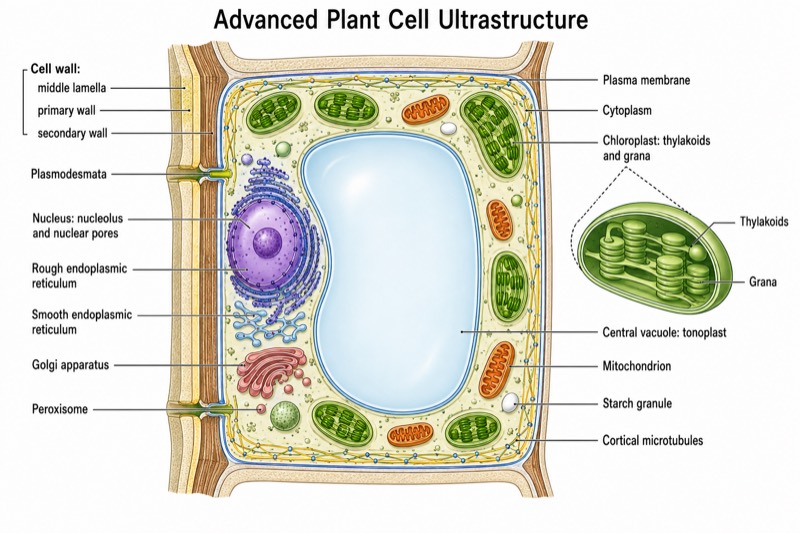
A Plant Cell Structure Diagram shows the main parts of a typical plant cell and their functions. The cell wall forms a strong outer layer that supports and protects the cell, while the cell membrane controls which substances enter and leave. Cytoplasm fills much of the cell and is where many chemical reactions occur. The nucleus contains genetic material and controls cell activities. Chloroplasts contain chlorophyll and absorb light energy for photosynthesis. The large vacuole holds cell sap and helps keep the cell firm. Mitochondria release usable energy through aerobic respiration.
The structures work together to keep the plant cell alive. Water entering the vacuole causes it to expand and press the cell membrane against the cell wall, helping support the plant. The cell membrane regulates the movement of water, mineral ions, sugars, and other substances between the cell and its surroundings. Chloroplasts use light energy, carbon dioxide, and water to make glucose during photosynthesis. Some glucose is then broken down in mitochondria during aerobic respiration, releasing energy for growth and other cell processes. The nucleus coordinates these activities, while enzymes in the cytoplasm support many essential reactions.
What a correct diagram must include
- Cell wall — draw it as the thick outer boundary because it provides strength, protection, and a fixed shape.
- Cell membrane — place it just inside the cell wall because it controls the movement of substances into and out of the cell.
- Cytoplasm — show it filling the space around the organelles because many chemical reactions take place there.
- Nucleus — draw one clear, usually rounded structure because it contains genetic material and controls cell activities.
- Chloroplasts — include several small oval structures in the cytoplasm because they contain chlorophyll for photosynthesis.
- Vacuole — draw one large central space because a mature plant cell usually has a large permanent vacuole filled with cell sap.
- Mitochondria — add several small oval or bean-shaped structures because aerobic respiration releases energy inside them.
- Labels and leader lines — use straight, non-crossing lines that end exactly on each structure so every part is identified clearly.
Common mistakes
- Drawing the cell membrane outside the cell wall; the cell wall is the outermost layer, and the membrane lies immediately inside it.
- Showing many small vacuoles instead of one large central vacuole in a typical mature plant cell.
- Confusing chloroplasts with mitochondria; chloroplasts carry out photosynthesis, while mitochondria carry out aerobic respiration.
- Drawing chloroplasts in every plant cell; some plant cells, such as root hair cells, normally lack chloroplasts because they receive little or no light.
- Leaving the cytoplasm unlabeled or treating it as empty space; it is the material surrounding the organelles and is a site of many chemical reactions.
Teaching tips
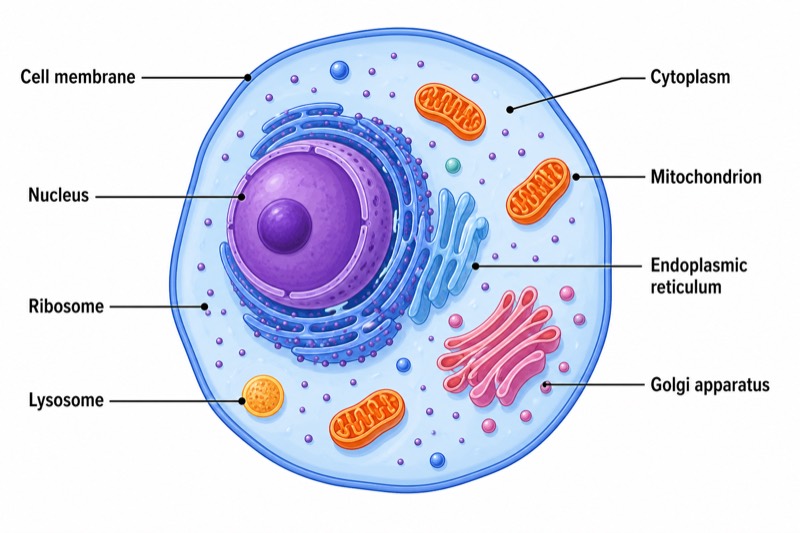
Use the diagram after introducing cells or during a comparison of plant and animal cells. First, ask students to identify the outermost boundary, the largest internal structure, and the organelles involved in energy transfer. Then remove the labels and have students complete them from memory before matching each structure to its function. Questions such as “How does the vacuole support the cell?” and “Why do leaf cells contain chloroplasts?” test understanding rather than simple recall. The diagram also supports common assessment tasks involving labeling, structure–function relationships, and differences between plant and animal cells.
FAQ about this diagram
What is the difference between the cell wall and the cell membrane?
The cell wall is a rigid outer layer that supports and protects the plant cell. The cell membrane lies inside it and selectively controls which substances enter and leave the cell.
Why is the vacuole so large in a mature plant cell?
The vacuole stores cell sap, which contains water and dissolved substances. When it fills with water, it presses outward and helps keep the cell firm, or turgid.
How are chloroplasts and mitochondria different?
Chloroplasts absorb light energy and make glucose during photosynthesis. Mitochondria break down glucose during aerobic respiration to release usable energy for cell activities.