Stages of Mitosis Generator
Free online Stages of Mitosis generator: get a fully labeled figure in about 90 seconds. The AI plans the must-have label list first, then renders a clean textbook-style diagram — every label editable afterwards, ready for papers, assignments and slides.
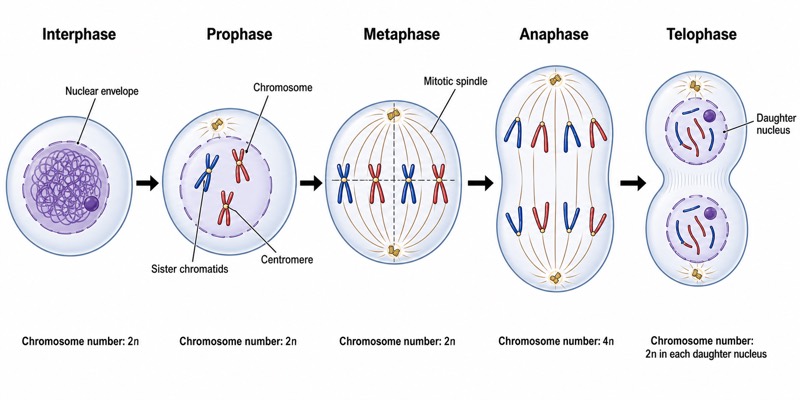
Labels included in this diagram
- Interphase
- Prophase
- Metaphase
- Anaphase
- Telophase
- Chromosome
- Sister chromatids
- Centromere
- Mitotic spindle
- Nuclear envelope
- Chromosome number: 2n
- Chromosome number: 4n
- Daughter nucleus
✓ Accurate labels ✓ Edit text after generation ✓ PNG for papers, posters & slides
 OUTPUT · 16:9 · PNG
What this diagram shows
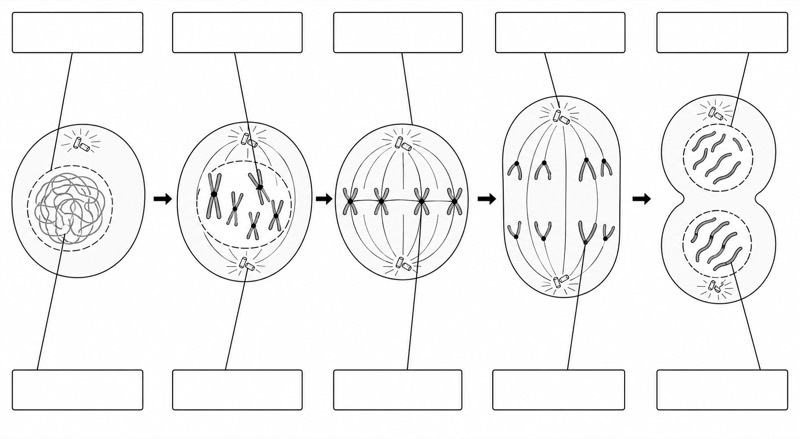
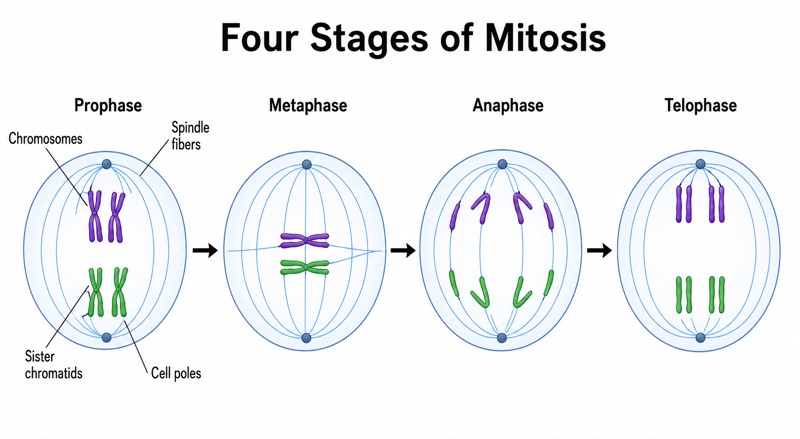
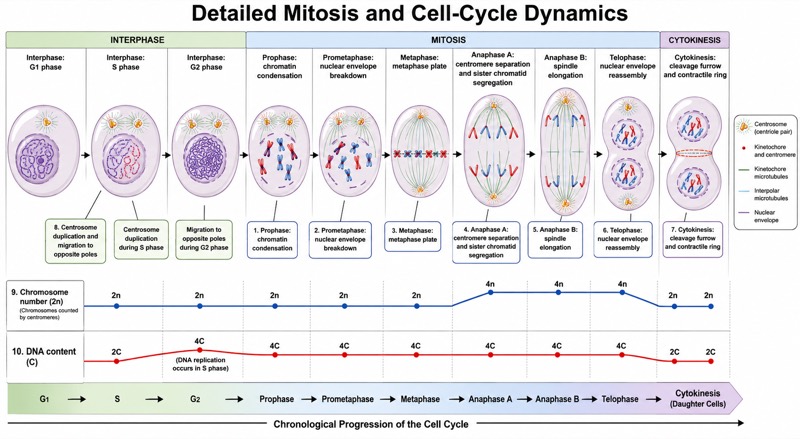
A mitosis process diagram shows how one parent cell distributes duplicated genetic material into two genetically identical daughter cells. It should present interphase, prophase, metaphase, anaphase, and telophase in sequence. During interphase, DNA is replicated but remains as diffuse chromatin. In prophase, duplicated chromosomes condense, the spindle forms, and the nuclear envelope breaks down. At metaphase, chromosomes align at the cell equator. During anaphase, sister chromatids separate and move to opposite poles. In telophase, chromosomes decondense and new nuclear envelopes form around the two chromosome sets.
The stages are linked by changes in chromosome structure, spindle attachment, nuclear-envelope state, and chromosome number. Each duplicated chromosome consists of two sister chromatids joined at a centromere. Spindle microtubules attach to kinetochores near the centromeres and position the chromosomes at the metaphase plate. At anaphase, centromeres divide, so the separated chromatids become daughter chromosomes. The chromosome number within the single cell temporarily doubles, but each new nucleus receives the same chromosome number as the original parent nucleus. Cytokinesis usually overlaps telophase and divides the cytoplasm, completing the formation of two daughter cells.
What a correct diagram must include
- Stage sequence — Arrange interphase, prophase, metaphase, anaphase, and telophase in order, using arrows to show that the process is continuous.
- Chromosome form — Draw diffuse chromatin in interphase, condensed duplicated chromosomes in prophase and metaphase, separated daughter chromosomes in anaphase, and decondensing chromatin in telophase.
- Centromeres and sister chromatids — Show each metaphase chromosome as two sister chromatids joined at one centromere; after centromere division, draw each chromatid as an independent chromosome.
- Spindle apparatus — Draw spindle fibers forming from opposite poles, attaching near chromosome centromeres, and shortening to move daughter chromosomes during anaphase.
- Nuclear envelope — Show an intact nuclear envelope in interphase, its breakdown during prophase, its absence in metaphase and anaphase, and its re-formation in telophase.
- Chromosome positioning — Place chromosomes irregularly in early prophase, along the metaphase plate in metaphase, and in two equal groups moving toward opposite poles in anaphase.
- Chromosome-number labels — Use a simple model such as 2n = 4: label 4 chromosomes before anaphase, 8 chromosomes temporarily within the anaphase cell, and 4 chromosomes in each daughter nucleus.
- Cytokinesis — Indicate a cleavage furrow in an animal cell or a cell plate in a plant cell, while keeping cytokinesis distinct from nuclear division.
Common mistakes
- Drawing visible X-shaped chromosomes in interphase; interphase chromosomes are generally uncondensed chromatin and cannot be distinguished individually in a standard light-microscope diagram.
- Counting chromatids as chromosomes before anaphase; chromosome number is determined by centromere number, so a duplicated X-shaped chromosome is still one chromosome.
- Showing chromosome number as halved after mitosis; each daughter nucleus normally receives the same chromosome number as the parent nucleus.
- Attaching spindle fibers randomly to chromosome arms; they should connect to kinetochores located near the centromeres.
- Confusing mitosis with cytokinesis; mitosis divides the nucleus, whereas cytokinesis divides the cytoplasm and may overlap with telophase.
Teaching tips
Use the diagram after students understand chromosome replication and before comparing mitosis with meiosis. Ask students to identify each stage from chromosome condensation, alignment, separation, and nuclear-envelope changes rather than from memorized shapes. Questions such as "When does chromosome number temporarily double?" and "Why are daughter cells genetically identical?" connect the image to common assessment points. Students can also annotate a 2n = 4 model, trace one chromosome through all stages, and compare cytokinesis in plant and animal cells.
FAQ about this diagram
Does chromosome number change during mitosis?
Before anaphase, each duplicated chromosome still counts as one chromosome because its sister chromatids share one centromere. When the centromeres divide at anaphase, the chromosome number within the undivided cell temporarily doubles, but each daughter nucleus receives the original number.
What is the role of spindle fibers?
Spindle microtubules attach to kinetochores near chromosome centromeres, align chromosomes at the metaphase plate, and separate sister chromatids. Their coordinated action ensures that the two daughter nuclei receive equal chromosome sets.
Is interphase part of mitosis?
Interphase is part of the cell cycle but is not technically a stage of mitosis. It is included in process diagrams because DNA replication and centrosome duplication prepare the cell for prophase, metaphase, anaphase, and telophase.