Unlabeled Mitosis Diagram (Blank Worksheet)
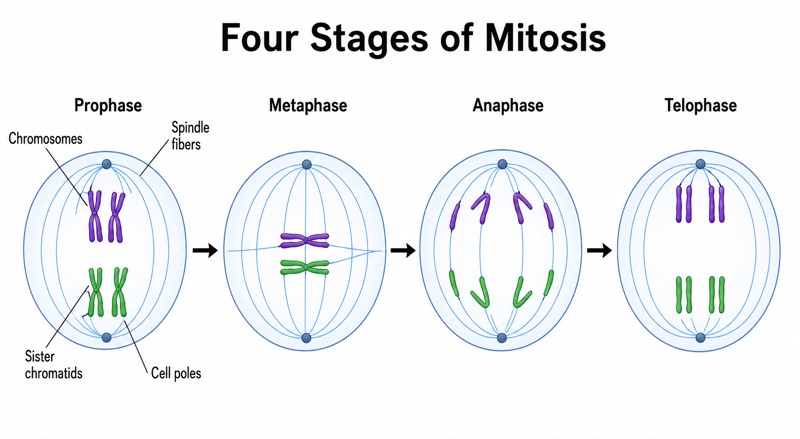
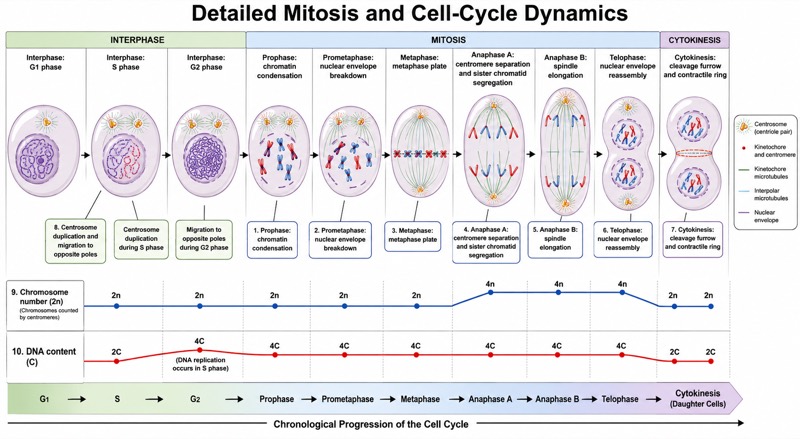
Unlabeled Mitosis Diagram (Blank Worksheet) — an alternative version of the Stages of Mitosis, generated by AI and fully editable. Download the PNG for quizzes, homework or slides.
✓ Accurate labels ✓ Edit text after generation ✓ PNG for papers, posters & slides
 OUTPUT · 16:9 · PNG
What this diagram shows
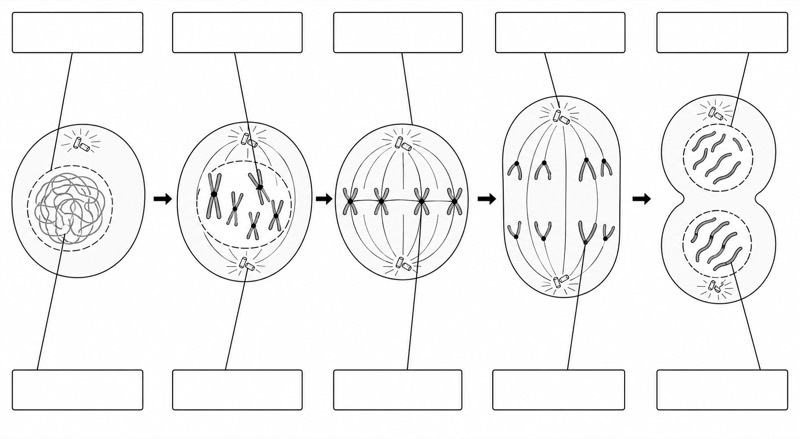
This unlabeled mitosis diagram (blank worksheet) shows a cell progressing through interphase, prophase, metaphase, anaphase, and telophase. Chromosome form and position, spindle organization, nuclear-envelope changes, and centromere behavior are represented visually. Unlike the standard main diagram, this version contains no printed words, letters, stage names, or numbers. Instead, thin leader lines connect important features to evenly arranged blank rectangular boxes. The absence of answers turns the reference illustration into an active-recall exercise that tests whether students can recognize each stage and structure from biological evidence rather than from nearby labels.
Read the cells in sequence by observing chromosome condensation, alignment at the equator, sister-chromatid separation, and nuclear-envelope re-formation. Students can write stage names and structure terms in the blank boxes, then add chromosome or chromatid counts where requested by the teacher. This distinction matters: DNA is replicated before mitosis, but mitosis normally preserves the species-specific chromosome number in each daughter nucleus. Use the blank version before showing the standard labeled diagram, or compare both afterward so students can correct misconceptions about spindle attachment, centromeres, chromosome movement, and the difference between chromosome number and DNA content.
Teaching tips
- In-class quiz: distribute the diagram without a word bank and ask students to identify the five stages, chromosomes, spindle fibers, nuclear envelopes, and centromeres from their visible features.
- Homework practice: have students complete every blank box, draw arrows showing chromosome movement, and explain beneath the worksheet why daughter nuclei retain the original chromosome number.
- Presentation activity: project the blank worksheet and reveal or write one answer at a time while students justify each stage using chromosome position, spindle formation, and nuclear-envelope status.
- Review outline or printed handout: place the blank version beside a student-created summary table covering chromosome appearance, sister-chromatid state, spindle activity, and nuclear changes at each stage.
- Report or paper figure: use the clean, text-free sequence as a base illustration, then add only the terminology, numbering convention, and caption required by the assignment rather than relying on the fuller standard main diagram.
FAQ about this diagram
Why use the blank worksheet instead of the standard labeled mitosis diagram?
The standard diagram supports initial instruction because names appear beside the structures and stages. This blank version removes those cues, making it more suitable for retrieval practice, formative assessment, and checking whether learners can interpret chromosome and spindle behavior independently.
Does chromosome number change during the five illustrated stages?
After DNA replication, each chromosome consists of two sister chromatids, so DNA content has doubled even though chromosome number is usually described as unchanged. At anaphase the sister chromatids separate and are counted as daughter chromosomes; each completed daughter nucleus receives the same chromosome number as the original parent nucleus.