Unlabeled Food Web Diagram (Blank Worksheet)
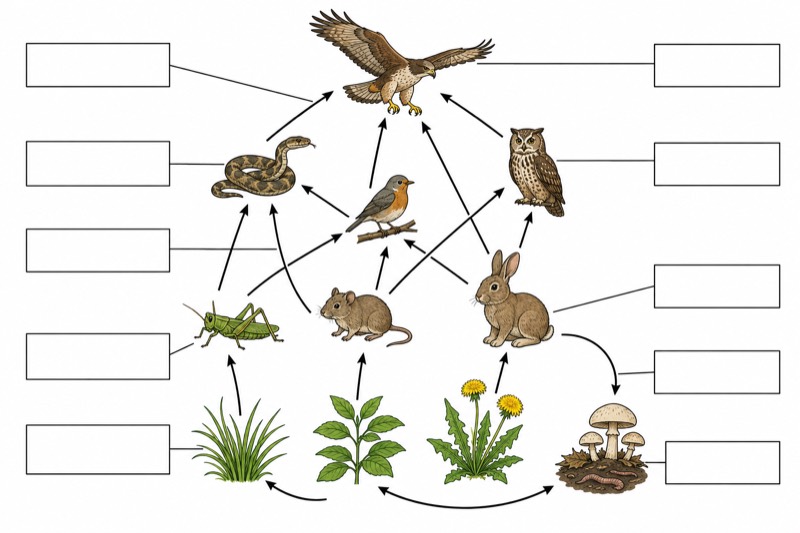
Unlabeled Food Web Diagram (Blank Worksheet) — an alternative version of the Food Web and Energy Flow, generated by AI and fully editable. Download the PNG for quizzes, homework or slides.
✓ Accurate labels ✓ Edit text after generation ✓ PNG for papers, posters & slides
 OUTPUT · 16:9 · PNG
What this diagram shows
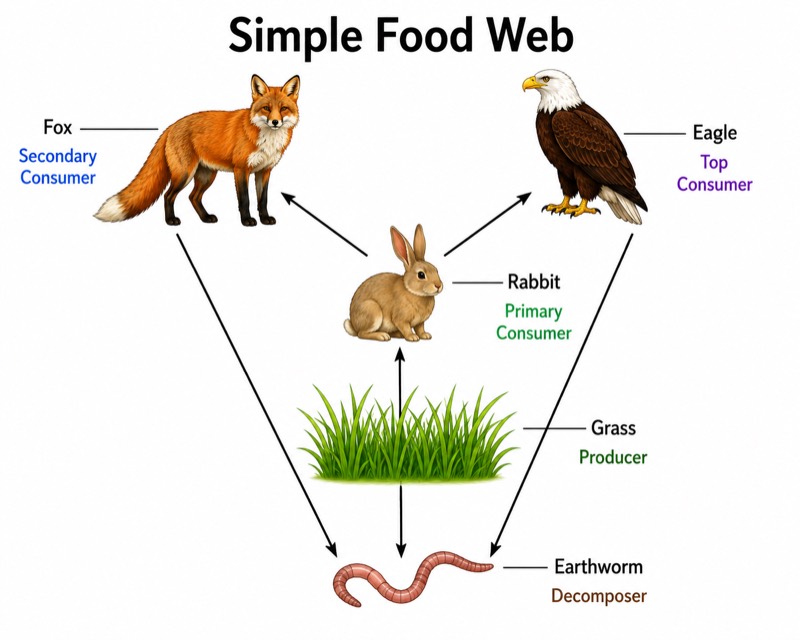
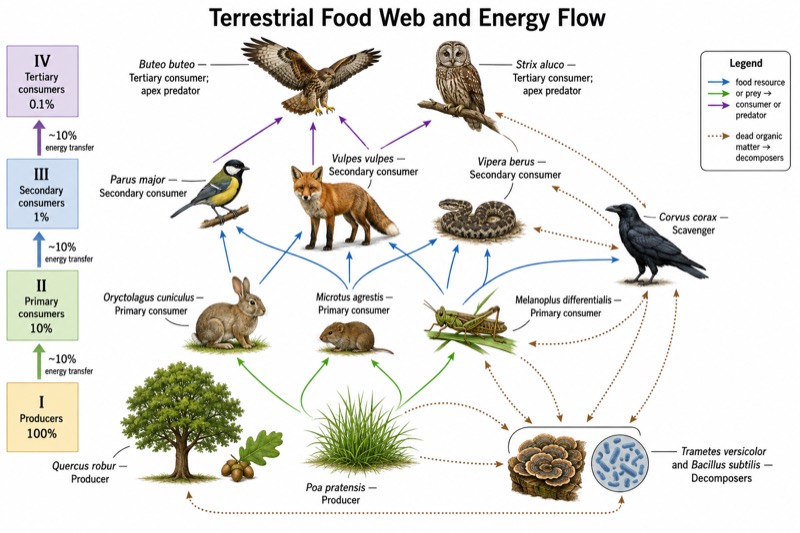
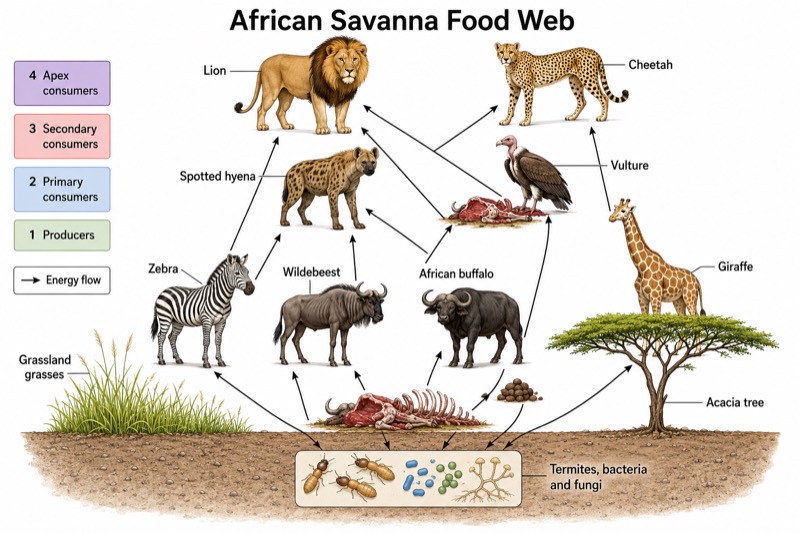
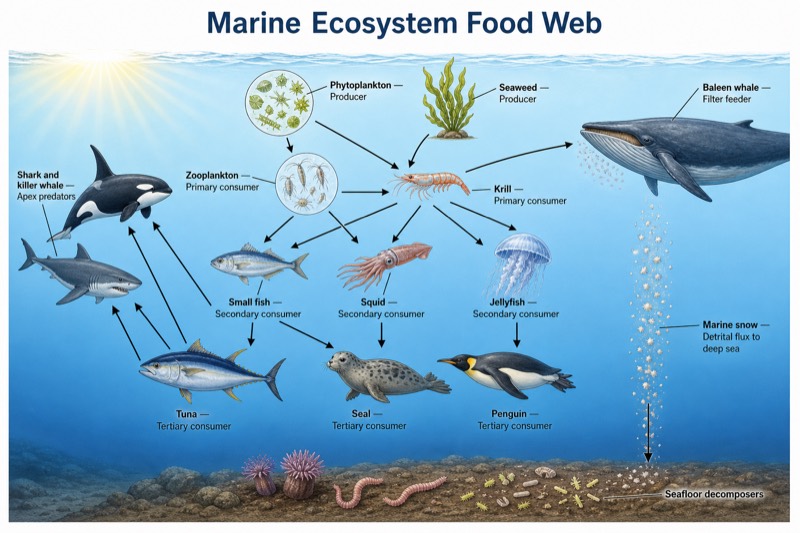
This unlabeled food web diagram (blank worksheet) shows green plants, primary consumers, secondary consumers, tertiary consumers, decomposers, and the feeding links among them. Unlike the standard reference diagram, it contains no words, letters, numbers, or completed trophic-level labels. Thin leader lines connect key organisms and structures to evenly arranged blank rectangular boxes outside the web. This version is useful because students must identify each ecological role from visual evidence rather than simply reading supplied answers, making it better suited to retrieval practice, assessment, and independent review.
Read each feeding arrow from the organism being eaten toward the consumer, because the arrow represents the direction of energy transfer. Students can write organism names, consumer categories, decomposer roles, or trophic levels in the empty boxes, depending on the lesson objective. They should begin with producers, trace energy into primary consumers, and then follow pathways to higher-level consumers. Unlike the labeled standard diagram, this blank version requires learners to reconstruct the hierarchy themselves. It can therefore reveal common misconceptions, especially reversed arrows, confused trophic levels, and the mistaken idea that energy cycles rather than flows through an ecosystem.
Teaching tips
- Classroom quiz: Print one copy per student and ask learners to fill the blank boxes with organism roles and trophic levels, then explain two energy-flow pathways using the arrow direction.
- Homework assignment: Provide a list of possible terms separately so students must match producers, primary consumers, secondary consumers, tertiary consumers, and decomposers to the correct visual structures.
- Presentation activity: Display the blank worksheet before showing the standard labeled diagram. Invite students to complete the boxes collectively, then compare their answers with the reference version and correct reversed energy-flow interpretations.
- Revision guide or printed handout: Place the blank diagram beside a short checklist asking students to identify food chains within the web, locate organisms with multiple feeding relationships, and predict the effect of removing one population.
- Report or paper figure: Use the clean, text-free framework when readers are expected to supply context-specific species names or annotations; add a caption explaining that arrows run from food source to consumer.
FAQ about this diagram
How is this blank worksheet different from a standard food web diagram?
The standard diagram supplies organism names, ecological roles, and trophic-level labels, whereas this version removes all text, letters, and numbers. Its empty label boxes turn the same scientific structure into an assessment tool that tests recall and interpretation rather than reading.
What should students write in the empty boxes?
Teachers may require organism names, producer and consumer categories, decomposer roles, or numbered trophic levels, provided the instructions define the expected response. Answers should follow the arrows from the eaten organism to the eater, reflecting the direction in which energy moves.