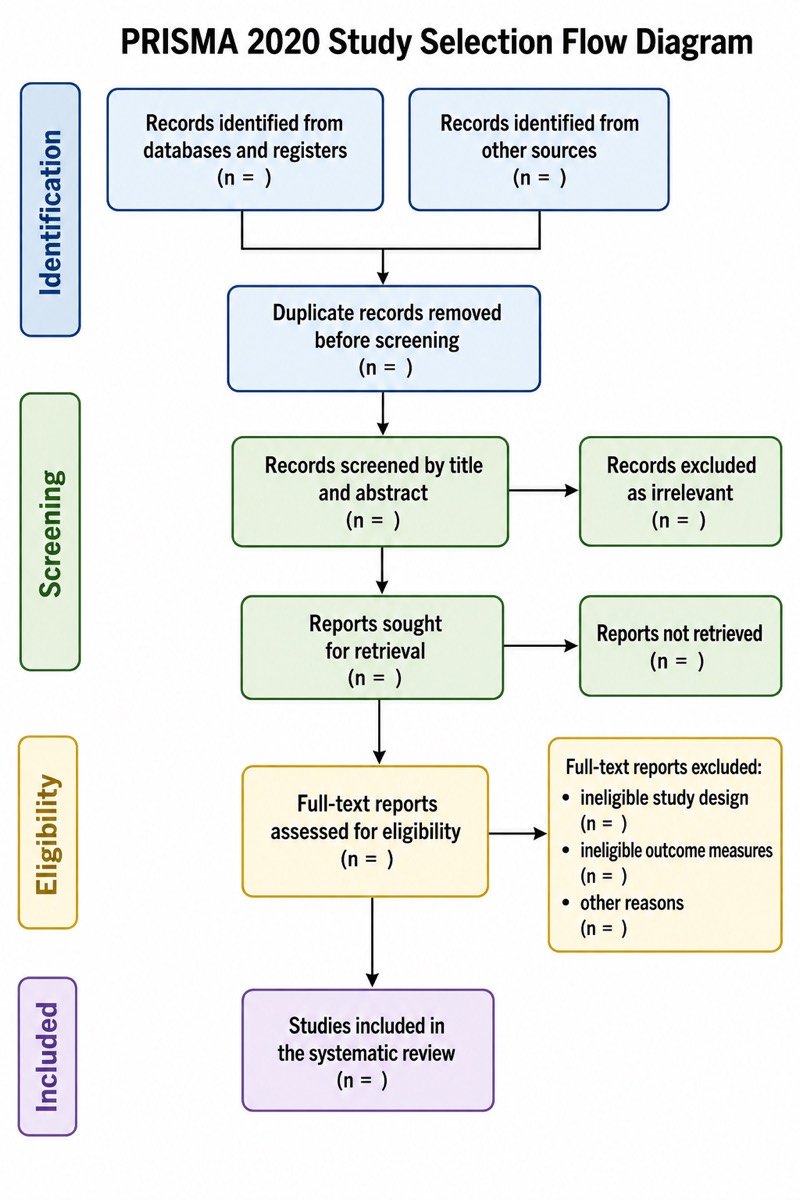
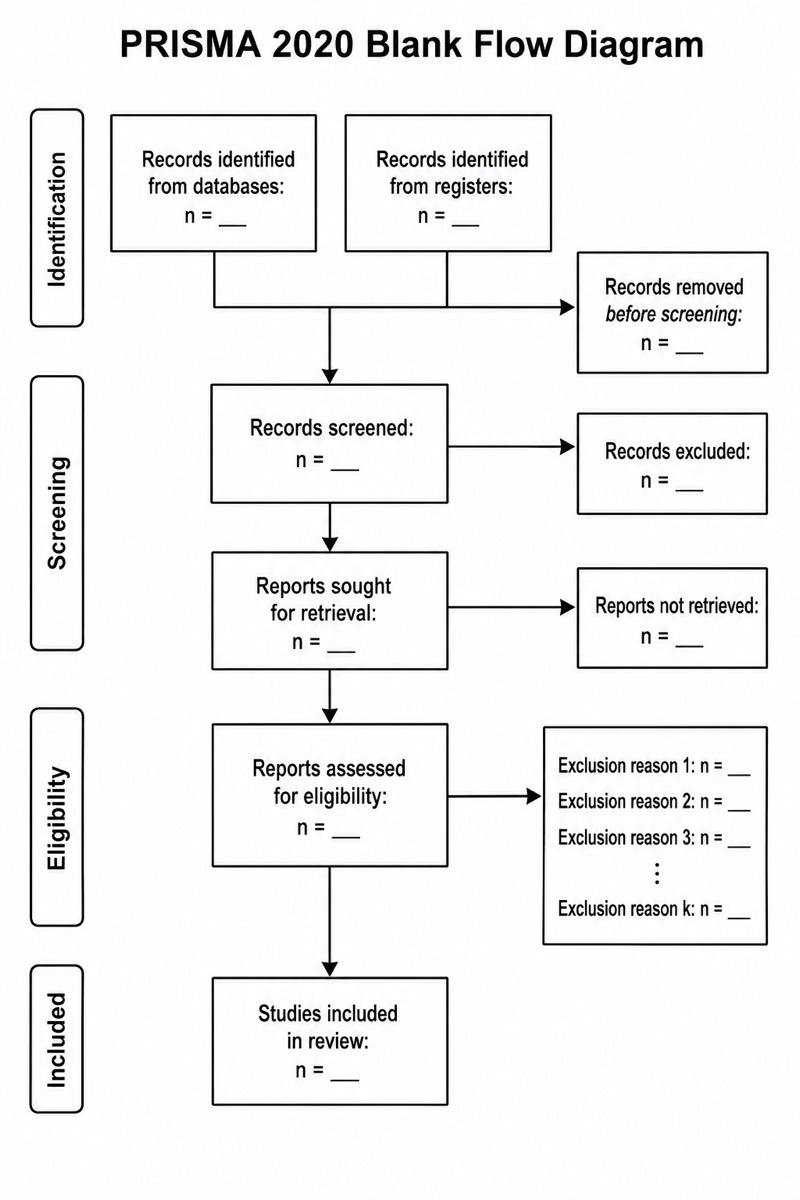
Simple PRISMA Flow Diagram for Middle School
Simple PRISMA Flow Diagram for Middle School — an alternative version of the PRISMA Flow Diagram for Systematic Reviews, generated by AI and fully editable. Download the PNG for quizzes, homework or slides.
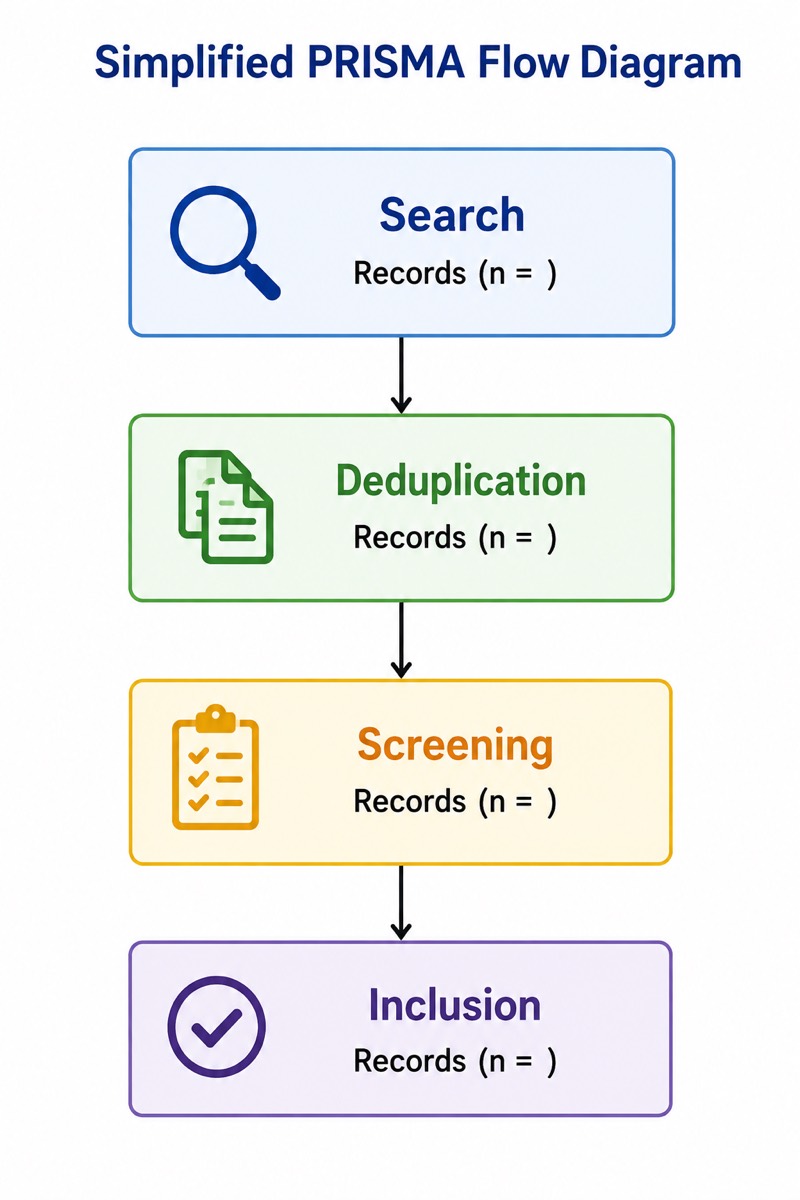
Labels included in this diagram
- Search
- Records (n = )
- Deduplication
- Records (n = )
- Screening
- Records (n = )
- Inclusion
- Records (n = )
✓ Accurate labels ✓ Edit text after generation ✓ PNG for papers, posters & slides
 OUTPUT · 16:9 · PNG
What this diagram shows
This simple PRISMA flow diagram for middle school reduces the standard PRISMA diagram to four vertically arranged boxes: Retrieval, Deduplication, Screening, and Inclusion. Each box contains an “n =” placeholder for the number of records at that step. Unlike the standard main diagram, it omits databases, registers, exclusion reasons, retrieval failures, and separate report counts. The reduced structure is intentional: it helps upper-primary and middle-school students understand the basic logic of literature selection before they encounter the full reporting framework.
Read the diagram from top to bottom. Students first enter the number of records found, then record how many remain after duplicates are removed, how many pass title or summary screening, and how many sources are finally included. Teachers can use subtraction between boxes to discuss where records were removed. Compared with the standard PRISMA main figure, this version emphasizes sequence and simple counting rather than complete systematic-review documentation. Use it when the learning goal is process comprehension; use the standard diagram when detailed, publication-level reporting is required.
Teaching tips
- In-class quiz: provide the four boxes with blank “n =” fields and give students a short numerical scenario. Ask them to calculate and enter the count remaining after each step.
- Homework assignment: have students search a small set of books, articles, or websites on one topic, remove repeated items, apply one screening rule, and document the final selection in the diagram.
- Presentation slide: place the simplified diagram beside a classroom research question and reveal one box at a time while explaining how a source list becomes a focused evidence set.
- Review outline or printable handout: use the four stages as memory prompts, asking students to define retrieval, deduplication, screening, and inclusion in their own words.
- Paper illustration: use this version for a school research report that only needs a basic overview of source selection. For a formal systematic review, replace it with the standard PRISMA diagram and report exclusion reasons and all required counts.
FAQ about this diagram
Why does this version leave out exclusion reasons and other PRISMA details?
The omissions reduce cognitive load and keep attention on the four essential actions. The standard main diagram is more complete, but its branches and reporting categories can distract beginners who are still learning the basic sequence.
Can this simple diagram be used in a formal systematic review?
It can introduce or summarize the general selection process, but it is not a substitute for the standard PRISMA flow diagram in formal reporting. Publication-level reviews should document databases, duplicates, screened records, excluded reports, exclusion reasons, and included studies as required.