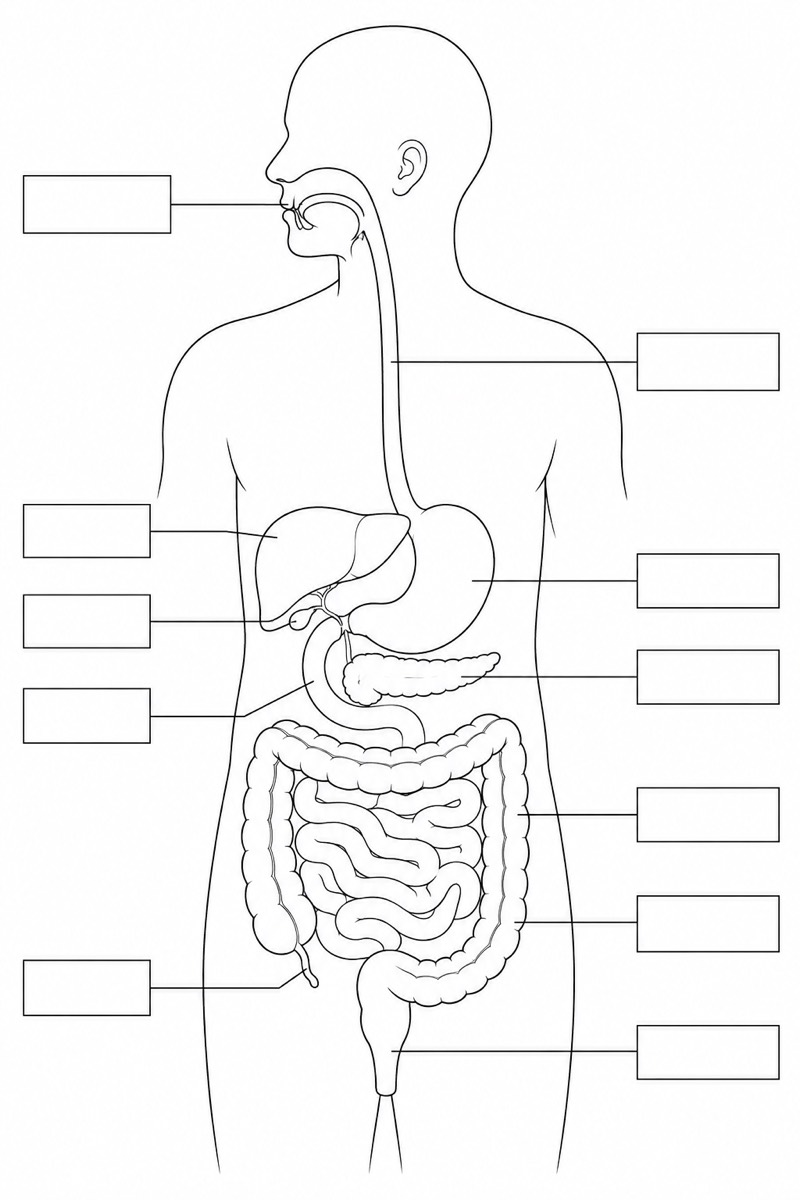
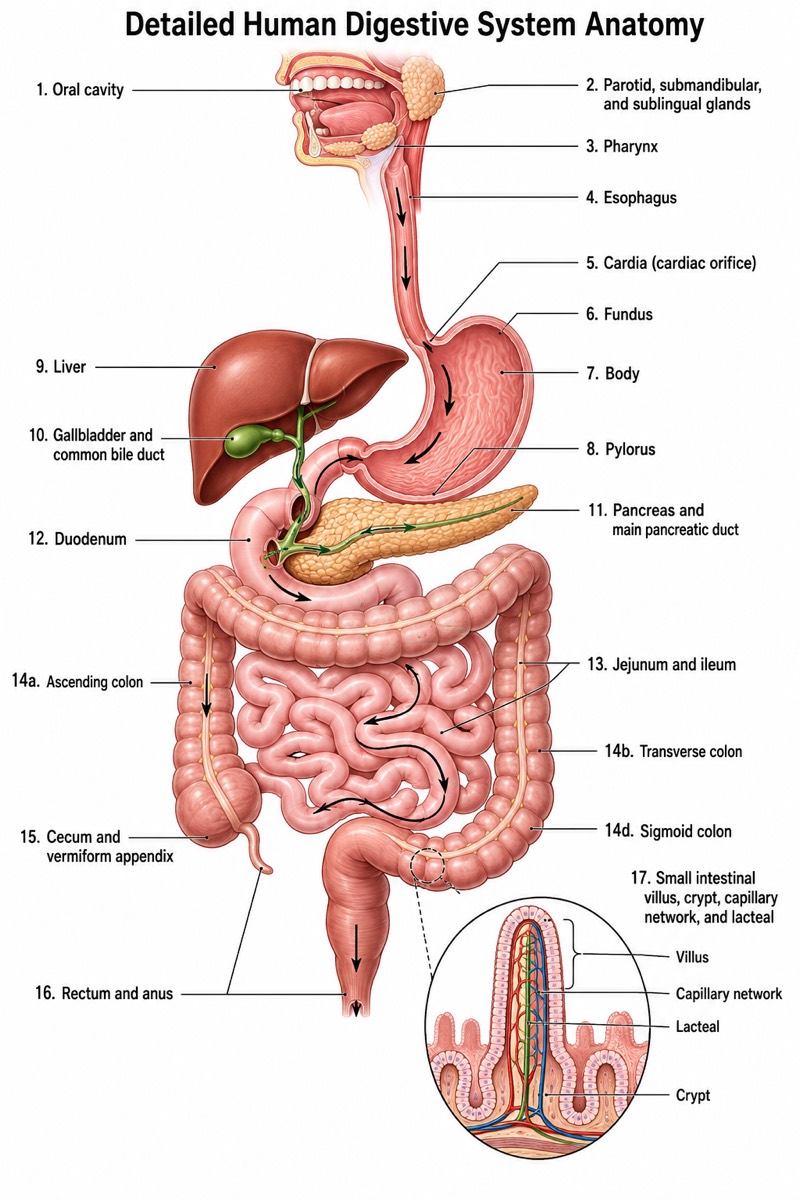
Simple Digestive System Diagram for Middle School
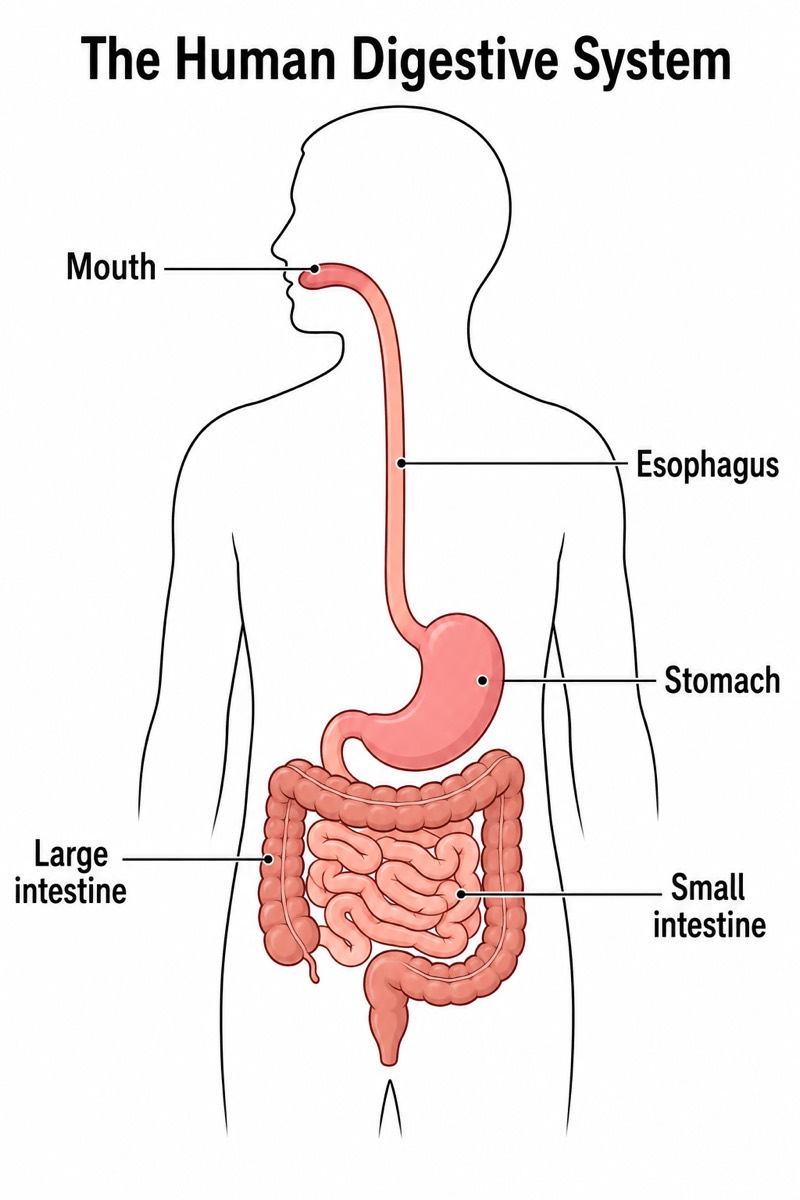
Simple Digestive System Diagram for Middle School — an alternative version of the Human Digestive System, generated by AI and fully editable. Download the PNG for quizzes, homework or slides.
Labels included in this diagram
- Mouth
- Esophagus
- Stomach
- Small intestine
- Large intestine
✓ Accurate labels ✓ Edit text after generation ✓ PNG for papers, posters & slides
 OUTPUT · 16:9 · PNG
What this diagram shows
This simplified diagram shows only five essential parts of the digestive tract: the mouth, esophagus, stomach, small intestine, and large intestine. Unlike a standard digestive system diagram, it omits accessory organs, glands, ducts, tissue layers, and fine anatomical detail. A clear body outline, bright colors, large labels, balanced spacing, and a symmetrical layout make each structure easy to identify. This version is useful when upper-elementary or middle school students need to understand the basic route of food before studying digestion in greater anatomical or physiological depth.
Read the diagram from top to bottom, following food from the mouth through the esophagus to the stomach, then into the small intestine and large intestine. Students can point to each organ, name it aloud, and state its main function in one sentence. Because this simple digestive system diagram for middle school removes nonessential details, it reduces visual distraction and supports sequence learning. Use it before the standard main diagram as an introduction, or after a detailed lesson as a quick review of the five core structures.
Teaching tips
- In-class quiz: remove or cover the five labels and ask students to identify each organ, then number the structures in the order that food passes through them.
- Homework: have students copy the simplified diagram, add arrows showing the path of food, and write one basic function beside each organ.
- Presentation slide: display the diagram while introducing the digestive tract, revealing one label at a time before moving to the more detailed standard diagram.
- Review outline: place the image beside a five-step summary so students can connect each organ name with its position, sequence, and primary role.
- Printed handout or report illustration: use the uncluttered version when the learning goal is basic orientation rather than accessory organs, enzymes, ducts, or detailed anatomy.
FAQ about this diagram
Why does this version omit the liver, pancreas, gallbladder, rectum, and other digestive structures?
This version is designed to teach the simplest continuous route followed by food. Those structures are important in a standard diagram, but omitting them helps beginners focus first on the five main organs and their sequence.
Should students use this simplified diagram instead of a standard digestive system diagram?
Use it as a foundation, not a complete replacement. Once students can identify the mouth, esophagus, stomach, small intestine, and large intestine, the standard diagram can introduce accessory organs and more precise anatomical relationships.